
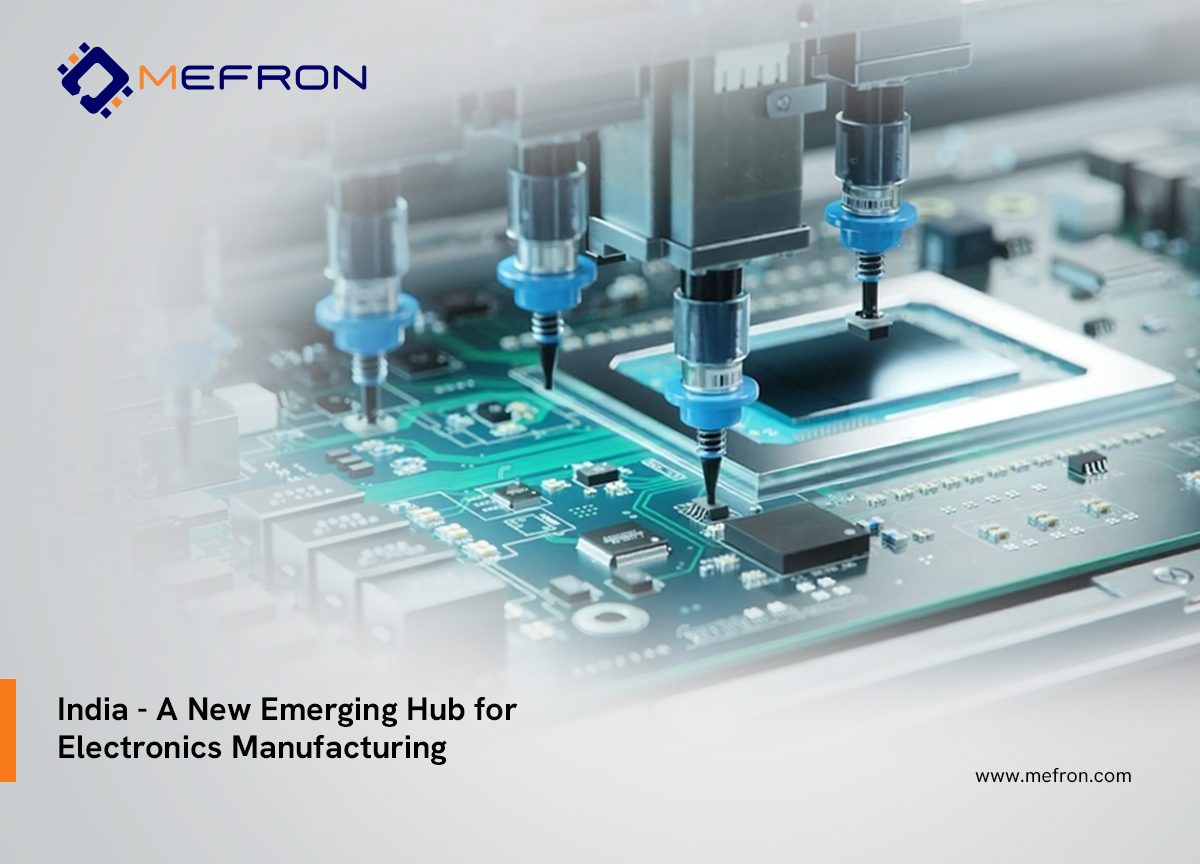
Before we begin, let's do a small exercise. List five technologies that come to your mind. My list includes IoT (Internet of Things), 3D printing, solar panels, smartphones, and artificial intelligence. Now ask yourself, can any of these technologies function without electricity or electronic equipment? Most likely not.
The 21st century has clearly shown that countries focusing on technology, especially electronics, have significantly boosted their economies. Nations like Taiwan, Japan, Singapore, and Hong Kong are prime examples, where electronics manufacturing services play a critical role. In today's scenario, India is investing heavily in electronic manufacturing, as it not only strengthens the economy but also promotes self-reliance and long-term growth compared to a services-led IT model.
1. Government Initiatives & Policy Support
In a developing economy, government policy plays a crucial role in accelerating the growth of key industries. Through incentive schemes such as the Production Linked Incentive (PLI) program, the Indian government has encouraged both global and domestic companies to invest in electronics manufacturing. These incentives are designed to boost production, improve competitiveness, and attract long-term investments.
To further strengthen sectors such as consumer electronics, semiconductors, and mobile phone manufacturing, initiatives like Make in India have been introduced. Such policies simplify the regulatory environment, promote foreign direct investment, and most importantly build confidence among businesses to invest in India's electronics ecosystem.
2. Strategic Geopolitical Advantage
India, one of the world's largest peninsulas, is surrounded by the sea on three sides. Ports like Nhava Sheva rank among the busiest globally, while an extensive network of railways and highways connects cities and industrial hubs, ensuring smooth logistics for imports and exports.
With the largest workforce in the world and a booming market for durable consumer goods, India offers both production capacity and domestic demand. Its stable political environment and strong international relations make the country highly attractive for foreign investors.
The EMS (Electronics Manufacturing Services) sector is rapidly expanding, giving global companies the option to manufacture locally or outsource tasks like PCB assembly and other job work. This not only reduces costs but also provides a competitive edge in the global electronics market.
Top 10 PCB Assembly Companies in India
3. Rising Domestic Demands
Aggregate demand primarily depends on two factors: the number of consumers and their disposable income. India has the largest population in the world and is the fourth-largest economy. Its growing middle class is becoming increasingly affluent and invests heavily in durable consumer goods, most of which are electronics. Investing in India's electronic manufacturing industry, therefore, not only offers a cost advantage but also provides valuable insights into the domestic market.
4. Best Environment for Setting EV Industry
The world economy has seen a tremendous shift in the 21st century. While the global economy once revolved around the petroleum industry, it is now shifting toward electronics, as most light vehicles are operating on electricity. Soon, there may come a time when electricity completely replaces petroleum.
The electric vehicle industry is growing at a CAGR of 23% from 2024 to 2033, and it may continue to grow at this rate. India is the best market to test products, as it has the largest consumer base. The best expansion strategy for any EV company is to invest in India, and especially in Indian EMS companies. Most global industries are interested in partnering with Indian EMS companies for box-build assembly and SKD & CKD assembly to reduce cost, and gain a competitive advantage.
EMS Solutions for EV Industry
5. Setting Up an Ecosystem
Developing a business ecosystem involves efficiently converting raw materials into finished goods and delivering them to end consumers, while also creating demand for those products. Demand generation is a crucial part of any successful ecosystem. In this context, the Government of India's slogan "Local ko vocal banaye" aims to promote domestic products across all industries, including consumer electronics.
To become a global leader in electronic manufacturing, India is focusing on building a comprehensive ecosystem. This includes introducing incentive schemes to encourage entrepreneurs, strengthening supply chain management by reducing import duty on key raw materials, and investing in education to create a skilled workforce. Additionally, special economic zones have been established to support the growth of electronic manufacturing services in the country.
6. Focus on International Market
The radius of economic growth expands with exports. To become the world's largest economy, India must increase its exports, particularly in the electronics sector. Gross Domestic Product (GDP) represents the market value of all final goods and services produced within a country during a specific period. Expanding exports contributes to GDP growth when consumers across the world choose Indian products, even at premium prices.
In the electronics industry, consumers often prioritize quality over price. If products are developed in line with the expectations of international consumers, firms can successfully compete in global markets. Brands such as LG, Samsung, and Sony demonstrate this in the Indian market. However, achieving this requires the development of strong domestic electronic manufacturing services that emphasize high quality and zero-defect production. Therefore, India must develop its infrastructure to effectively meet the demands of international markets.
Partner with Mefron for Electronics Manufacturing
The field of electronics is not the most profitable, but also the most innovative. India has the largest youth population. Let me rephrase the sentence: "India has the largest tech-savvy youth population." The meaning of a startup is a product with an innovative idea. Every tech student in India has a dream to have its own startup, and the entire ecosystem is promoting these progressive thoughts.
Youth want wealth and fame, and a successful innovative idea gives them both. A well-developed ecosystem, like electronic manufacturing services, efficient supply chain management, and effective government policies, accelerates their growth. The educated and talented youth are the most valuable asset for any country.
Conclusion
After the Second World War, countries realized that electronics would shape economies and societies in the decades to come. This is evident today in communication devices such as smartphones, computers, and the internet. In the medical industry, electronic devices like MRI machines have revolutionized diagnostics and treatment. Digital currency, online payments, robotics, IoT, and automation all rely on electronics and are transforming society.
Creating a strong electronics ecosystem not only generates wealth for a nation but also promotes self-sufficiency in critical areas, including defence. A country that depends on others for electronics will remain at an economic disadvantage. While governments create policies, it is the companies that trust these initiatives and invest in emerging industries. For example, Mefron Technologies recognized this potential and invested in electronic manufacturing services. Developing such ecosystems is essential for national growth, innovation, and global competitiveness.