
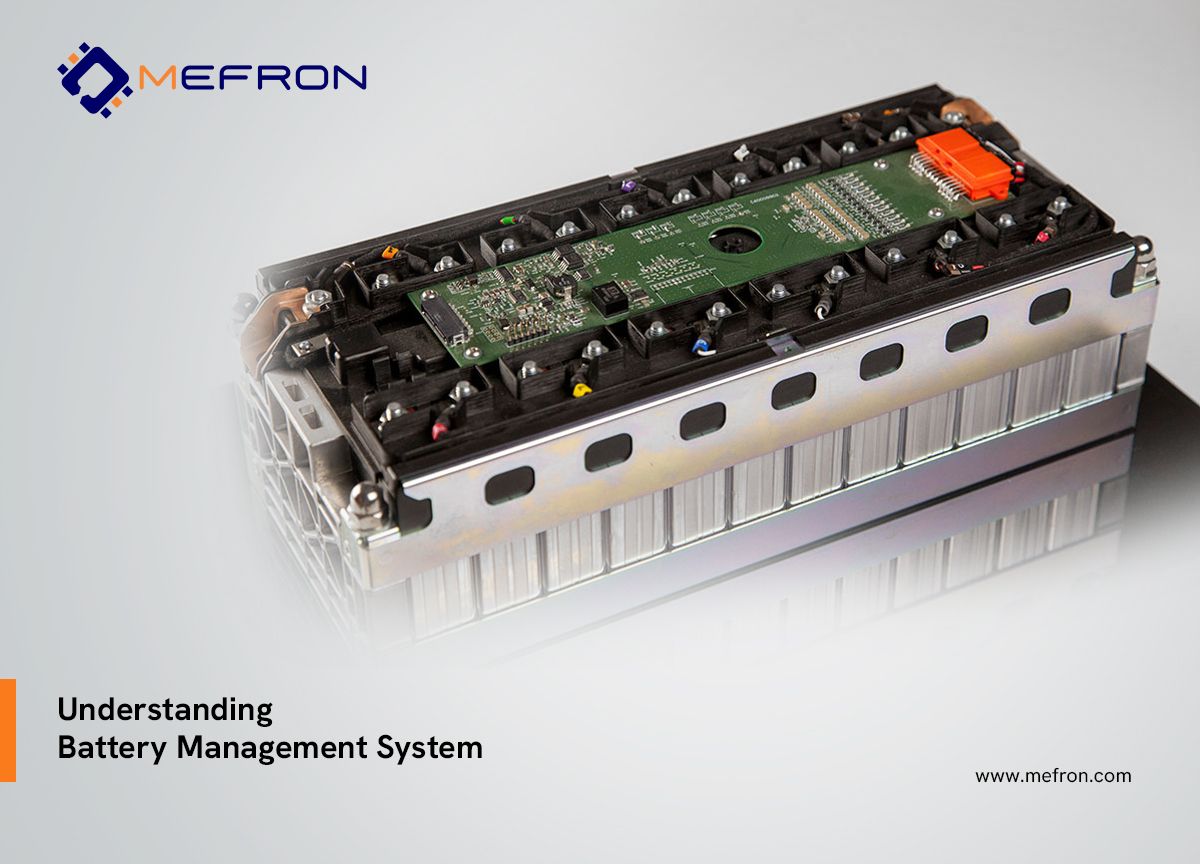
In the booming EV market, most competitors overlook aesthetics and extra functionality they can add to their products to boost sales and profit margins, thereby limiting their focus on safety and longevity. Yet, in a product like an EV, these two factors are paramount. An inadequate BMS can lead to accidents that endanger riders, passengers, or the surrounding environment.
Some reputed brands have already faced these consequences, severely damaging their reputation, you can easily search recent EV incidents in India. As an EMS company and BMS contract manufacturers, we feel responsible for discussing the EV's most crucial component: the BMS, or the "brain of the electric vehicle." Through this blog, we also explain how EMS companies produce high-quality systems that meet automotive standards like ASIL-C.
Core Functions of a BMS
A BMS oversees critical operations across hundreds or thousands of battery cells arranged in series and parallel configurations. Key functions include:
- Cell Monitoring and Balancing:Continuously measures voltage, current, temperature, and state of charge (SOC)/state of health (SOH) for each cell to prevent imbalances that cause "hot spots" or reduced capacity.
- Protection Mechanisms:Safeguards against overcharge, over-discharge, short circuits, and thermal runaway by disconnecting the pack or activating discharge resistors.
- State Estimation:Calculates SOC and SOH under dynamic conditions, using algorithms for impedance measurement and fault prediction.
- Communication and Logging:Interfaces with vehicle controllers via CAN, Bluetooth, or isoSPI for data sharing and stores logs for diagnostics.
These features enable EVs to handle extreme conditions, from sub-zero cold starts to high-heat drives.
Looking for an EMS Partner
How a BMS Works: Technical Breakdown
Modern BMS designs, like those from leading EMS companies, employ daisy-chained analog front-ends (AFEs) such as the ADBMS6830, which monitor up to 16 cells (0-5V range) per chip for high-voltage packs (~750V from 200 cells).
Key Components and Workflow
- Sensors and AFEs: Daisy-chained AFEs measure cell voltages with high accuracy, detecting open wires or differentials. isoSPI transceivers ensure reliable bidirectional communication.
- Microcontroller (MCU): Processes data, runs balancing via PWM-controlled resistors, and estimates SOC/SOH. Redundant transceivers prevent failures.
- Balancing Circuit: Passive or active balancing equalizes cells during charge/discharge, monitored by thermistors.
- Safety Layer: Triggers cutoffs for overcurrent/voltage, with features like thermal runaway detection.
| Component | Role | Example Tech |
|---|---|---|
| AFE (e.g., ADBMS6830) | Cell voltage/current monitoring | Daisy-chain for 200+ cells |
| MCU/Transceivers | Data processing & comms | CAN, Bluetooth, isoSPI |
| Balancing Resistors | Cell equalization | PWM duty cycle control |
| Sensors | Temp/impedance tracking | Thermistors per resistor |
This architecture minimizes wiring, reduces weight, and boosts EV range.
Evolution and Trends in BMS Design
From wired centralized systems to wireless, modular setups, BMS tech now prioritizes simulation tools for virtual prototyping, reducing prototyping cycles and costs. BMS contract manufacturers like those offering EV manufacturing services leverage ASIL-C reference designs to accelerate market entry.
India's EV boom (projected 95M global BEVs by 2030) underscores the need for indigenous ecosystems, with EMS company expertise addressing challenges like safe charging amid fire incidents.
Top 10 Wire Harness Manufacturers in Automotive Industry
Perfect EMS Partner for Complete BMS Solution
To get the perfect battery management system for your EV along with timely delivery and low cost, you just need to find a single perfect electronic manufacturing service provider who can provide turnkey solutions and complete box-build assembly services for the battery pack.
Relying on more than one EMS partner for BMS increases the probability of a defective product. There are a few EMS partners like Mefron Technologies who provide complete turnkey box-build solutions to EV manufacturers.
Ready to lead in EV manufacturing? Connect with us, your search for top BMS contract manufacturers ends here.